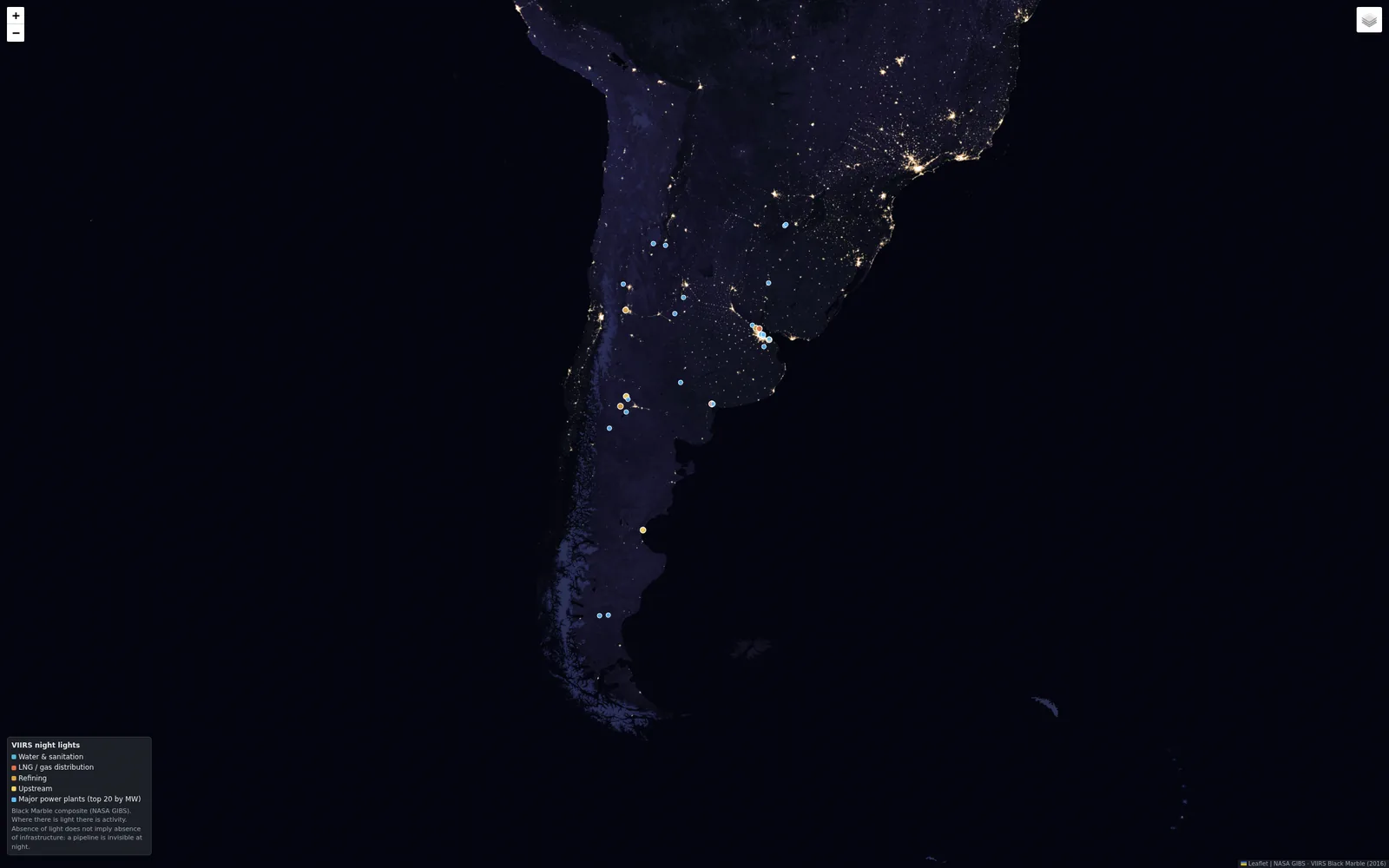
Argentina in the VIIRS Black Marble night-time composite, with critical facilities and the twenty largest power plants by capacity. The Buenos Aires–Rosario–Santa Fe corridor holds the strongest demand signal; field installations appear outside urban centers in Neuquén. See the interactive map →
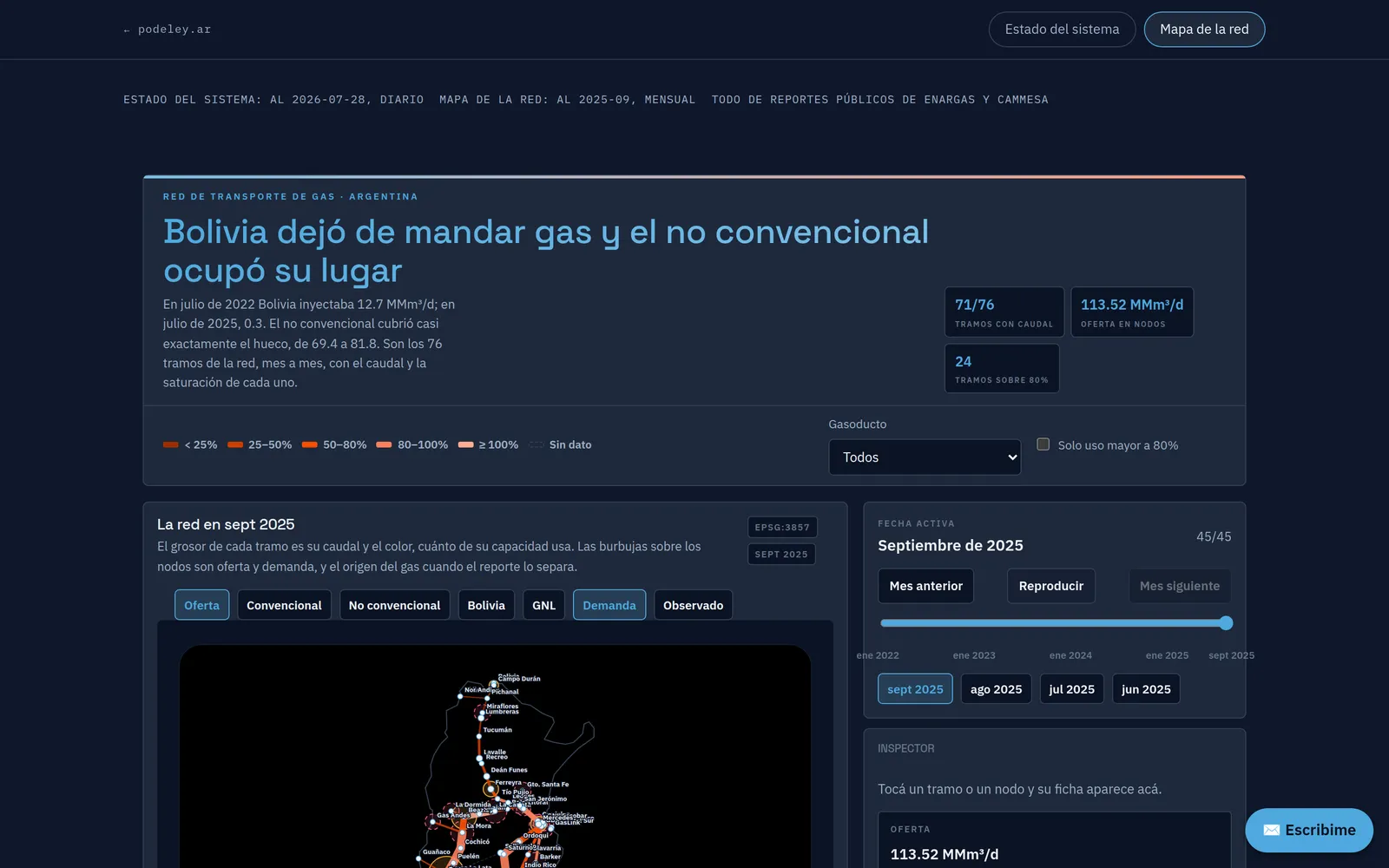
Daily demand, linepack, and injection, plus monthly series for 76 transport segments. Bolivian supply fell from 12.7 MMm³/d in July 2022 to 0.3 in 2025, and unconventional gas filled the difference. Eight segments exceed 100% because the denominator is nameplate capacity.
ENARGAS and CAMMESA · system current daily · network monthly, data to 2025-09
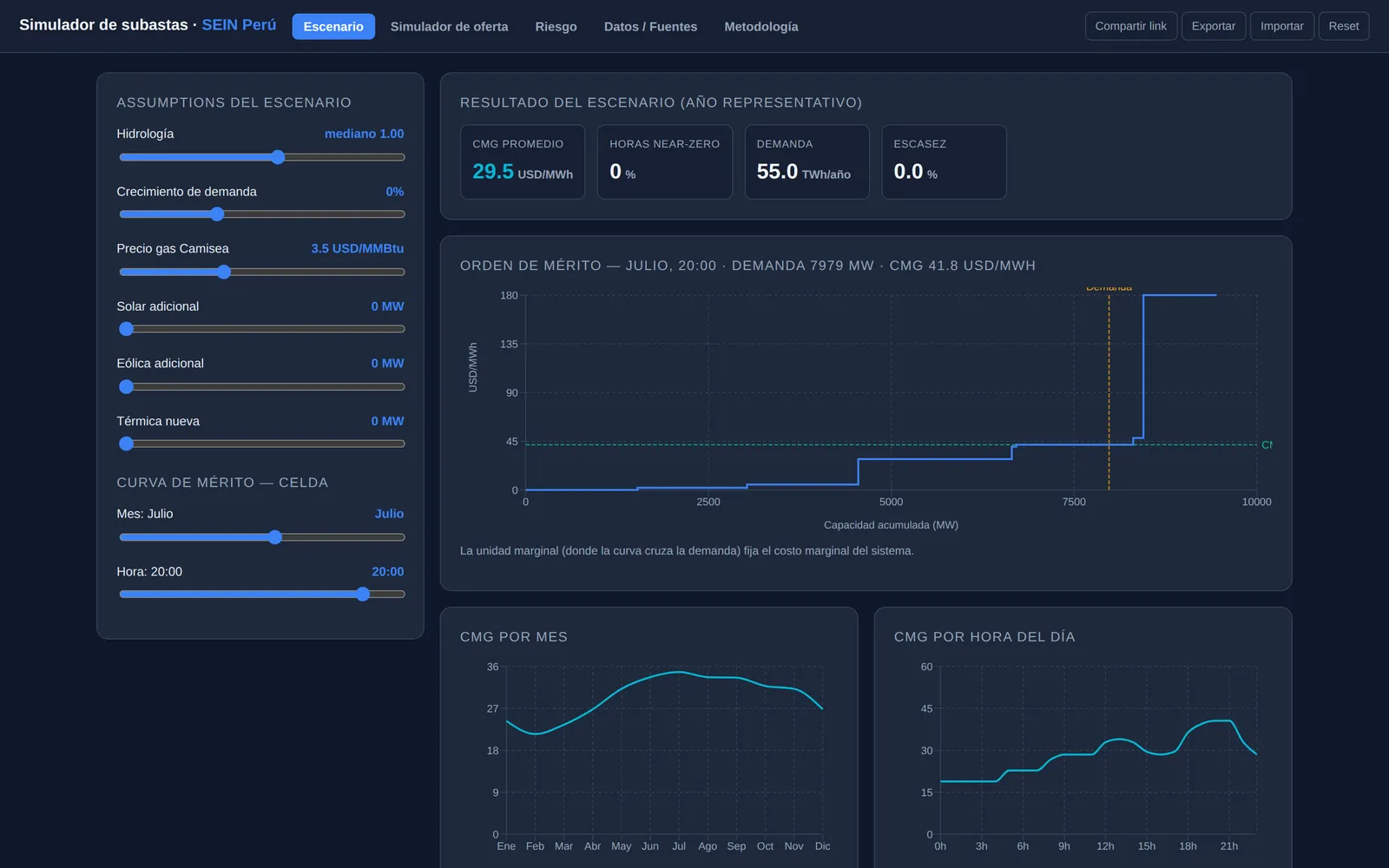
Merit-order dispatch and Monte Carlo over hydrology, demand, gas price, and renewable resources in Peru's SEIN. It calculates the outcome distribution for each bid price. The model runs in the browser and the dispatch engine is unit-tested.
COES + NASA POWER · SEIN, Peru · current, runs dailyCode →
The public versions use open data. A marketer's internal version can add contracts, segment constraints, nominations, and proprietary bid ranges. See ways to work.
Profile
Matías Podeley. An ITBA engineer, eighteen years in energy: four in operations in Neuquén, simulation of giant fields like Camisea and technical backing of asset purchases above US$ 300 million. Buenos Aires.